
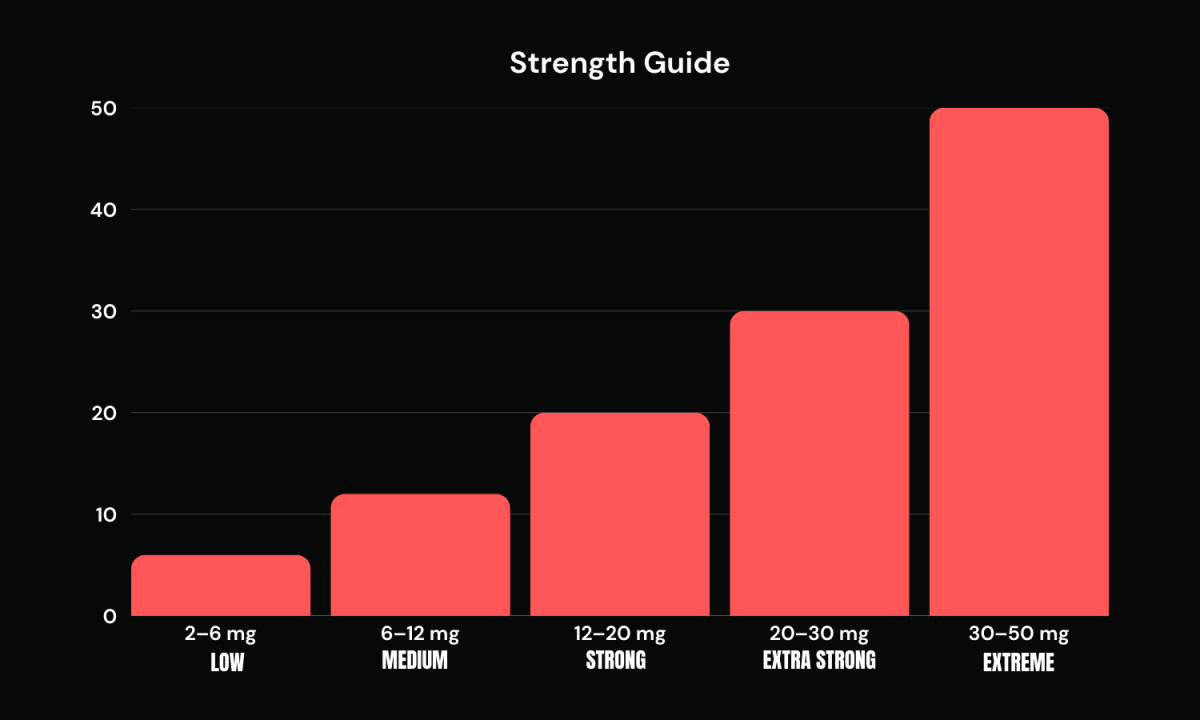
Nicotine pouch strength varies significantly across brands and types. Understanding these differences is crucial for selecting the right product for your needs.
Key Takeaways
- Nicotine strength in pouches is indicated in milligrams (mg), dot systems, and descriptive terms.
- Mini pouches often feel weaker due to less filling and slower nicotine release.
- Brands like ZYN, VELO, and Loop use their own dot systems, while others use mg directly.
- General strength categories are Light (≤ 4 mg), Medium (4.1 – 8 mg), Strong (8.1 – 12 mg), Extra Strong (12.1 – 20 mg), and Extreme (20.1 mg+).
How Nicotine Strength Is Measured
Nicotine strength in pouches is indicated in various ways, including milligrams (mg) of nicotine per pouch, dot systems, and descriptive terms. Each method offers a different perspective on the strength of the pouch.
1. MG (milligrams) of nicotine per pouch
This is the most accurate measurement. However, mg alone doesn’t determine how strong a pouch feels. Other factors like moisture level, pH level, nicotine salt vs free nicotine, pouch size, and release speed change the experience dramatically. For instance, a 10 mg moist pouch can feel much stronger than a 20 mg dry pouch.
- Moisture level: Moist brands like Lundgrens or Swave feel stronger.
- pH level: Higher pH increases the amount of “free nicotine,” making the pouch feel stronger.
- Nicotine salt vs free nicotine: Some brands optimize nicotine salts for a stronger kick.
- Pouch size: Bigger pouches = more surface area = faster absorption.
- Release speed: Dry brands like ZYN or On! release nicotine more slowly.
2. Dot systems
Brands like ZYN, VELO, Loop, On!, Kelly White, and others use dots or bars to indicate strength. However, each brand uses its own scale, meaning 3 dots on one brand does not equate to 3 dots on another brand. Dots should only be used to compare strengths within the same brand.
3. Descriptive terms
Many brands skip dots entirely and use terms like Light, Medium, Strong, Extra Strong, or Ultra / Extreme. These labels are not standardized either.
Why Mini Pouches Often Feel Weaker
Even when they display the same number of dots, mini portions typically contain less filling and release nicotine more slowly. For example, ZYN Mini 4 dots is approximately 6 mg, while ZYN Regular 4 dots equals 11 mg. This is one of the biggest sources of confusion for customers switching between formats.
Brands That Use Dot Systems vs. Brands That Don’t
Brands that commonly use dots or bars include VELO, ZYN, Loop, Lundgrens, On!, Kelly White, Swave, Avant, Zone X, White Fox, Skruf, XQS (some lines). Each of these brands assigns their own meaning to the symbol scale.
Brands that do NOT use dots include 77, Ace, Apres, Baow, Björn, Camo, Cuba, Fumi, Fix, Greatest Garant, Glick, Helwit, Iceberg, Killa, Kurwa, Kuma, Lynx, Nois, Pablo, Puff & Pouch, Siberia, XPCT, Zixs, and others. These brands primarily use mg per pouch, which is clearer but still influenced by moisture and formulation.
Why Strength Feels Different Across Brands
Even two pouches with the exact same mg level can deliver completely different experiences. This is due to a few technical factors:
1. Moisture content
Moist brands like Lundgrens or Swave feel stronger. Dry brands like ZYN or On! release nicotine more slowly.
2. pH level
Higher pH increases the amount of “free nicotine,” making the pouch feel stronger.
3. Pouch size and material
Bigger pouches = more surface area = faster absorption.
4. Nicotine salt concentration
Some brands optimize nicotine salts for a stronger kick. mg should be viewed as a guideline — not an absolute measurement of strength.
General Strength Categories
Here is a simplified strength guide based on typical mg levels:
- Light: ≤ 4 mg
- Medium: 4.1 – 8 mg
- Strong: 8.1 – 12 mg
- Extra Strong: 12.1 – 20 mg
- Extreme: 20.1 mg+
Always keep in mind that 10 mg from a moist pouch can feel stronger than 20 mg from a dry one.
How to Choose the Right Strength
If you’re new to nicotine pouches, start with 4–6 mg. Regular users should choose 6–12 mg. If you have high tolerance, try 12–20 mg. Brands like Pablo, Iceberg, Killa, Siberia, XPCT offer 20–50 mg options for those who prefer extremely strong pouches.
Frequently Asked Questions
Does more dots always mean more strength?
No, dots only compare strengths within the same brand. Dots do not equate across different brands. This is because each brand uses its own scale for dots, so a 3-dot pouch in one brand may not equate to the same strength in another.
Why do some brands not use dots?
Some brands prefer listing milligrams directly because it avoids confusion and provides a clearer indication of strength. Listing the exact milligrams of nicotine per pouch gives consumers a more accurate understanding of the product's strength.
Are mini pouches weaker?
Yes, mini pouches typically contain less nicotine and deliver it more slowly compared to regular-sized pouches. This is due to their smaller size and less filling, which results in a less intense experience.
Is higher mg always stronger?
No, the actual strength feel can be influenced by factors such as moisture content, pH level, and pouch type, not just the milligrams. For example, a 10 mg moist pouch can feel much stronger than a 20 mg dry pouch due to these factors.
Which brands are the strongest?
Brands like Iceberg, Pablo, Killa, XPCT, and Siberia are known for offering some of the highest-strength nicotine pouches. These brands provide options with nicotine levels up to 50 mg, catering to those who prefer extremely strong pouches.
Share: